I made these mistakes buying reading glasses for presbyopia so you don't have to. It's easy to get lost in all the options out there. We all just want to see clearly without breaking the bank. But take it from me, some shortcuts are just not worth it. I'm here to share what I learned the hard way so your eyes and wallet stay happy.
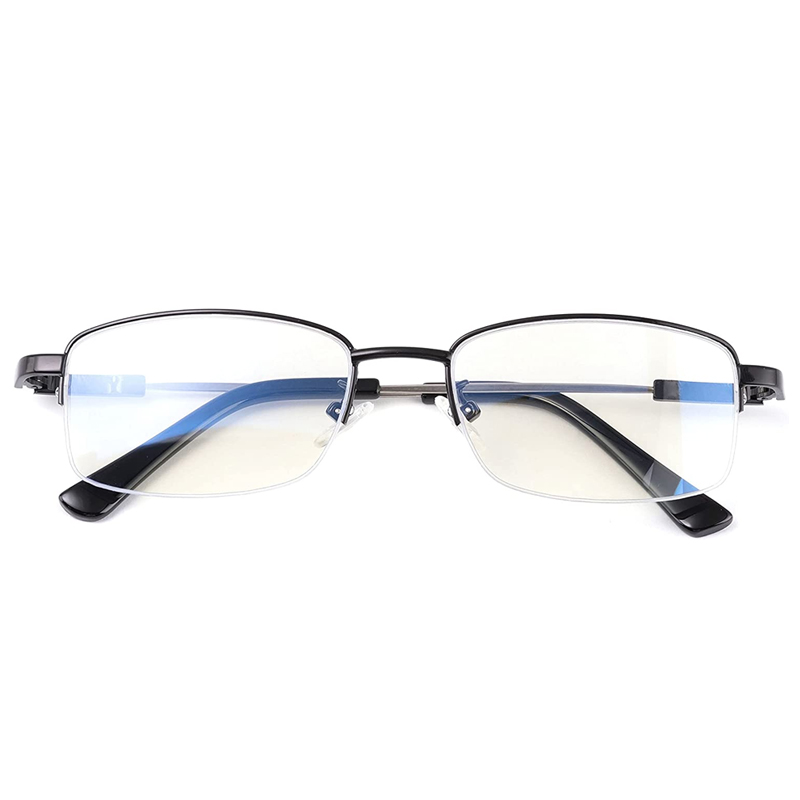
Buying the right reading glasses for presbyopia can save you a lot of trouble. You'll avoid eye strain, headaches, and the annoyance of constantly swapping glasses. My goal is to help you pick a pair that truly works, like the Pure Titanium Photochromic Progressive Multifocal Reading Glasses Men Anti-blue light HD half-frame Hyperopia Glasses I eventually found.
I get it, we all want to save money. When my vision started getting blurry up close, my first thought was "What's the cheapest pair I can find?" I went for the most basic, lowest-priced reading glasses for presbyopia I could see online. Big mistake.
The frames felt like they would snap any second. The lenses were a joke. I had to hold my head at weird angles just to find a clear spot. It was like looking through muddy water. After a week, they were scratched and useless. I ended up buying another cheap pair, then another. It was money down the drain.
A "reviewer" once said: "Got these for a few bucks. They broke within two days. You get what you pay for, I guess."
Verdict: Super cheap glasses rarely offer good quality or last long. They often cost more in the long run because you have to replace them over and over. Don't make my error by thinking you're saving money up front.
When I was looking for new reading glasses for presbyopia, I didn't know what to look for. I just picked glasses that looked okay in the picture. I ignored things like what the frames were made of or what kind of lenses they had. This led to more bad purchases.
I bought glasses with plastic frames that bent out of shape easily. The lenses weren't truly progressive, so I had a harsh line or blurry areas. They didn't have anti-blue light, so my eyes still felt tired after using my computer. I just assumed all glasses were pretty much the same.
A "reviewer" once said: "The photochromic feature barely worked, and the frames felt flimsy. My eyes still hurt after reading. Not happy."
Verdict: Always check the product details. Look for signs of good quality like materials (e.g., pure titanium), lens features (e.g., photochromic, anti-blue light, HD), and design (e.g., progressive multifocal). These details make a huge difference in comfort and performance. Learn from me!
My biggest mistake was buying based only on the product description and a fancy-looking ad. I didn't bother to scroll down and read what other people were saying. I especially didn't look for real photos from buyers.
If I had checked, I would have seen complaints about frames breaking, lenses scratching, or the glasses not looking like the picture. Often, the product in the ad looks perfect, but real-world use shows its flaws. Without reviews, you're guessing.
A "reviewer" once said: "Wish I read reviews first! These glasses are tiny compared to the picture and the lenses have a weird distortion. Total waste."
Verdict: Never buy without checking reviews and real buyer photos. They give you the real story. Look for consistent feedback, both good and bad, to get a full picture. This is a crucial step to avoid my error.